How Proper Cervical Spine Input Supports Balance After a Concussion or Car Accident
Feeling unsteady, wobbly, or like you’re walking on a boat — even weeks after a concussion or whiplash injury? The problem may not be just your inner ear or brain. The cervical spine plays a major role in how your body maintains balance, and when it's injured, your stability suffers.
Lance Stevenso, DC
1/6/20262 min read
How Proper Cervical Spine Input Supports Balance After a Concussion or Car Accident
At our Kansas City car accident clinic, Dr. Lance Stevenson, DC helps patients recovering from auto accidents and concussions by restoring proper neurological input from the neck to the brain, which is key for resolving chronic dizziness, poor posture, and visual-vestibular mismatch.
Why the Cervical Spine Matters for Balance
Your body maintains balance by combining input from three major systems:
Visual system (your eyes)
Vestibular system (your inner ear)
Proprioceptive system (your muscles and joints — especially in your neck)
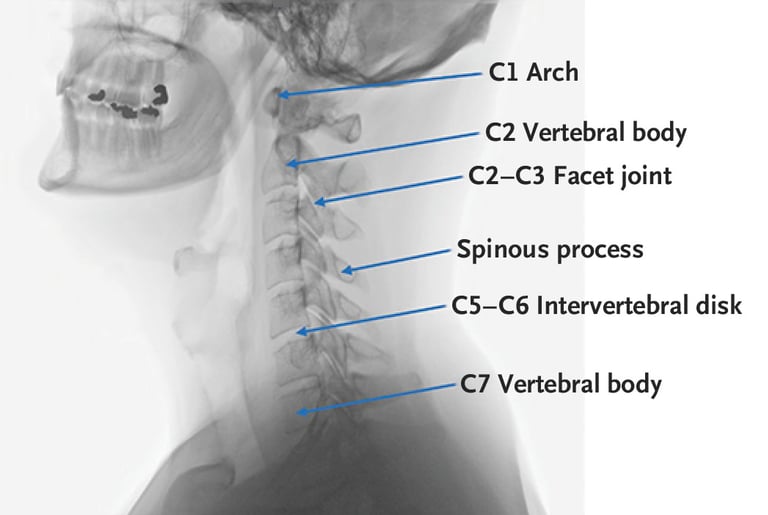
The upper cervical spine (C1-C3) contains a high concentration of proprioceptors — tiny sensors that tell your brain where your head is in space. This information is constantly sent to the brainstem and cerebellum, where it's integrated with signals from your eyes and ears to control balance, posture, and coordination.
If that neck input is distorted, delayed, or missing — due to trauma, whiplash, or concussion — your brain receives conflicting signals, which often leads to:
Dizziness or disequilibrium
Poor posture and neck stiffness
Visual motion sensitivity
Balance issues while walking, turning, or bending
Difficulty with dual-tasking (walking + thinking)
What Happens When Cervical Input Is Impaired?
After a concussion or auto accident, the cervical spine may be:
Inflamed or stiff
Experiencing altered proprioceptive input
Misaligned at the upper levels (C0–C3)
Overloaded by muscle guarding or postural strain
This can cause sensory mismatch, where your vestibular system says your head is still, but your neck says it’s moving — or vice versa. That mismatch makes your brain feel confused, leading to instability, lightheadedness, or even nausea.
In fact, some post-concussion dizziness is cervicogenic, meaning it originates from the neck, not the inner ear.
Signs Cervical Dysfunction Is Affecting Your Balance
Patients from Overland Park, Blue Springs, Lee’s Summit, and North Kansas City often report:
Dizziness triggered by turning the head (not the whole body)
Worsening balance when moving the neck
Feeling “off” in crowded or visually busy spaces
Neck pain accompanied by a sense of disequilibrium
Needing to rely on visual cues (walls, furniture) to feel stable
Poor performance on tandem stance or dynamic balance tests
How We Restore Proper Cervical Input in Kansas City
At our clinic, Dr. Lance Stevenson, DC performs a complete post-trauma assessment, including:
Cervical joint mobility testing
Proprioceptive reflex testing
Balance and postural control screening
Gaze stabilization and head-eye movement coordination
VOR and COR (vestibulo-ocular and cervico-ocular reflexes) assessment
Once cervical dysfunction is confirmed, we tailor your rehab with:
✅ Joint mobilization and manual therapy to reduce stiffness and restore range
✅ Proprioceptive retraining using laser headbands, wobble boards, and head movement drills
✅ VOR-COR integration exercises to resolve reflex mismatches
✅ Gaze stabilization with cervical motion to rebuild eye-neck coordination
✅ Posture and ergonomic correction to reduce strain on the upper cervical spine
Balance Is a Brain–Neck–Eye System — Not Just the Inner Ear
If you’re still dizzy or off-balance after a concussion or accident — and no one has looked at your neck — you may be missing a major part of the problem.
At our Kansas City clinic, Dr. Lance Stevenson, DC helps patients from Liberty, Shawnee, The Plaza, and Parkville recover fully by addressing the neurological role of the cervical spine in balance and stability.
Call 816-226-7476 today to schedule your full concussion and balance evaluation. Let’s get your brain, body, and balance working together again.
Disclaimer: This content is for general educational purposes only and does not constitute medical or legal advice. Reading this content does not establish a doctor–patient relationship. Always consult a qualified healthcare provider for evaluation and treatment of injuries, and seek legal counsel for insurance or legal matters.
Been in an Accident? Start Here.
Call us today for a free consultation or with any questions.
Expert Personal Injury Care
Whiplash Chiropractor in Kansas City
Lance@ChiroKC.com
816-226-7476
© 2026 Lance Stevenson, DC, LLC. All rights reserved.
Disclaimer: The content provided on this page is for informational and educational purposes only and is not intended as a substitute for professional medical, legal, or insurance advice. While every effort is made to provide accurate and up-to-date information, it should not be relied upon as the sole basis for decisions regarding your health, legal matters, or insurance claims. Please consult with your healthcare provider, attorney, insurance company, or other relevant professionals for personalized guidance tailored to your specific situation.
1010 Carondelet Dr., Suite 416
Kansas City, MO 64114